


There are various types of detergents used for cleaning the house, each with different characteristics and properties. If you don't use the right detergent for the area you're cleaning, it can lead to unnecessary effort and time, or even cause problems, so be careful.
This time, we've compiled useful information about cleaning detergents, such as how to choose the right detergent for each cleaning area, points to consider when choosing detergents, and what happens if you choose the wrong detergent.
Important Considerations When Choosing Detergents for Efficient & Safe Cleaning
There are so many cleaning detergents available that it can be difficult to choose the right one, but making a random choice could lead to regrets.
Especially when choosing a detergent, pay attention to the following points:
1. Pay attention to the compatibility between dirt and detergent
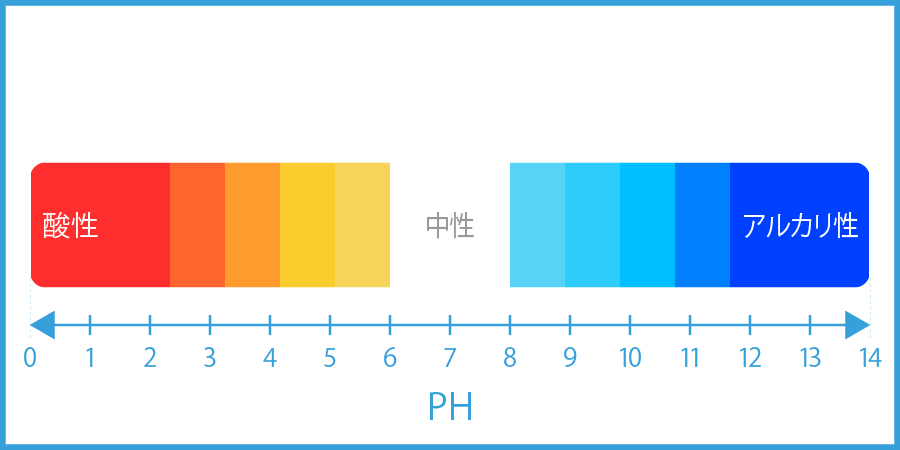
While we call it "dirt," its properties vary greatly depending on the type. For light dirt or daily maintenance, a general neutral detergent is fine, but otherwise, dirt is categorized into "acidic" or "alkaline."
Main acidic dirt includes grease, fingerprints, sebum, soap scum, and food spills.
On the other hand, alkaline dirt includes water stains, soap scum, limescale, rust, urine stains, and tobacco tar.
Whether something is acidic or alkaline is determined by the pH value, which represents the concentration of hydrogen ions in the solution. Pure water, the standard, has a pH of 7. A lower number indicates acidity, while a higher number indicates alkalinity.
To remove dirt, it's important to bring the pH value of the dirt closer to 7, or neutral. This process is called "neutralization."
In other words, using an alkaline detergent for acidic dirt and an acidic detergent for alkaline dirt will make it easier to remove the dirt.
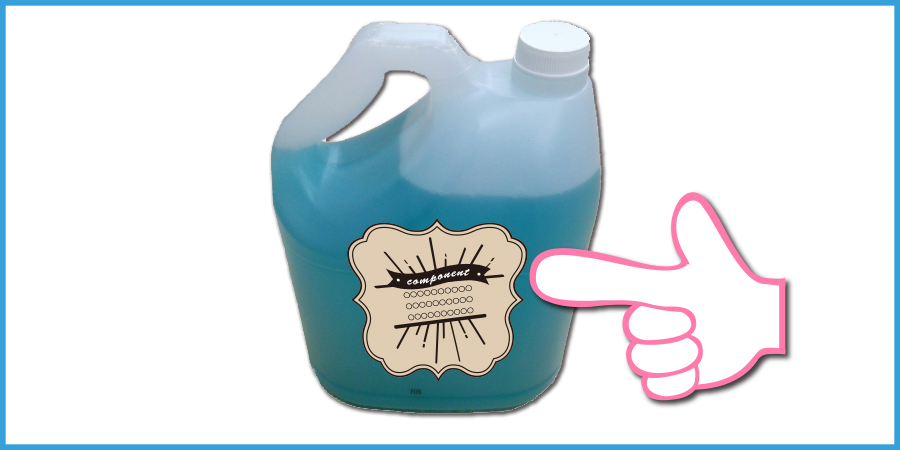
The "liquid type" section on detergent containers clearly indicates whether it is acidic, alkaline, or neutral, so choose a detergent that matches the nature of the dirt you want to remove.
2. Carefully check the "Do not use on" indications.
Some cleaning detergents may not be compatible with certain building materials or furniture materials in your home.
In particular, using an incompatible detergent on wood, leather, fabric, tiles, or plastic could damage the material itself.
The back of cleaning detergent packages lists examples of "things not to use on" and precautions for use, so be sure to check the contents carefully before purchasing.
3. Beware of "Do not mix" warnings.
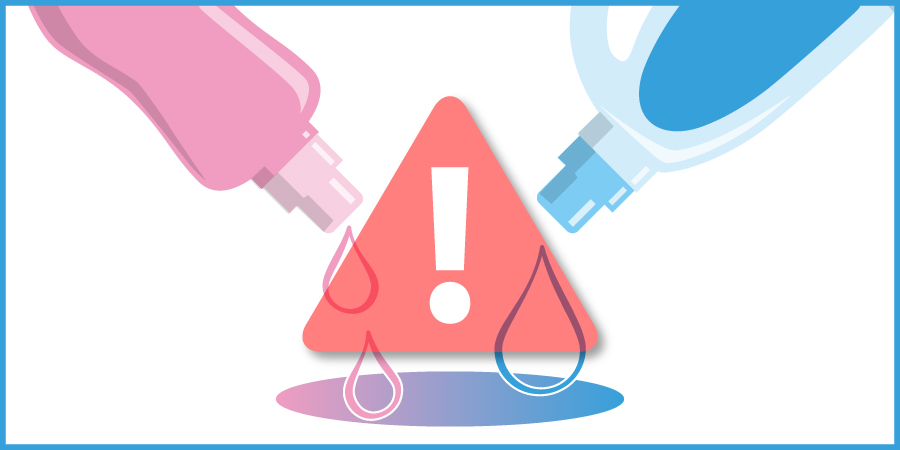
Household detergents generally have less cleaning power than industrial detergents, and there are very few that could be called strong chemicals.
Therefore, there's little danger when used alone, but mixing them with other detergents can cause a chemical reaction that generates toxic gases harmful to humans.
Many people buy several detergents at once, but even if it's troublesome, be sure to check the precautions for each and confirm whether any of the detergents you've purchased together are incompatible.
Problems that occur when you choose the wrong detergent
If you choose a detergent without careful thought, you might not only fail to clean your home but also create potential problems.
Let's look at two specific examples of problems that can occur.
1. Dirt won't come off even after a long time.
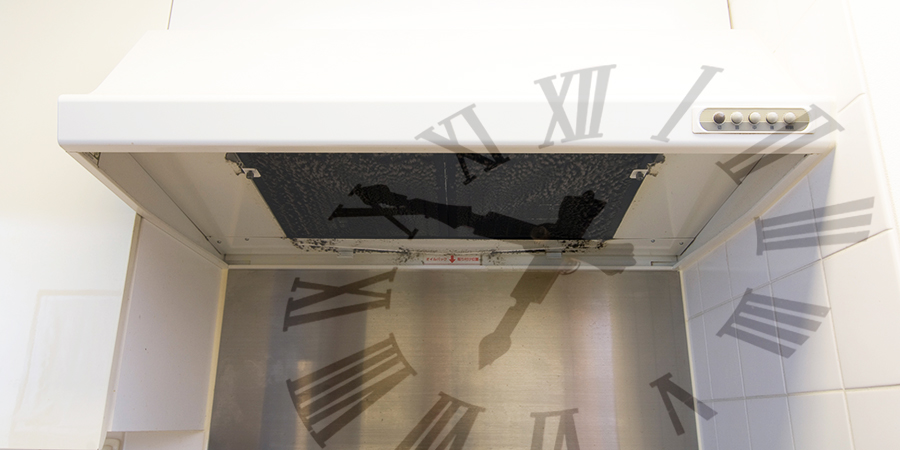
If you choose a detergent without considering its compatibility with the dirt, the dirt may not come off easily, leading to unnecessary effort and time.
Depending on the type of dirt, some may not come off over time, which can damage building materials and furniture.
2. Potential damage to building materials and furniture
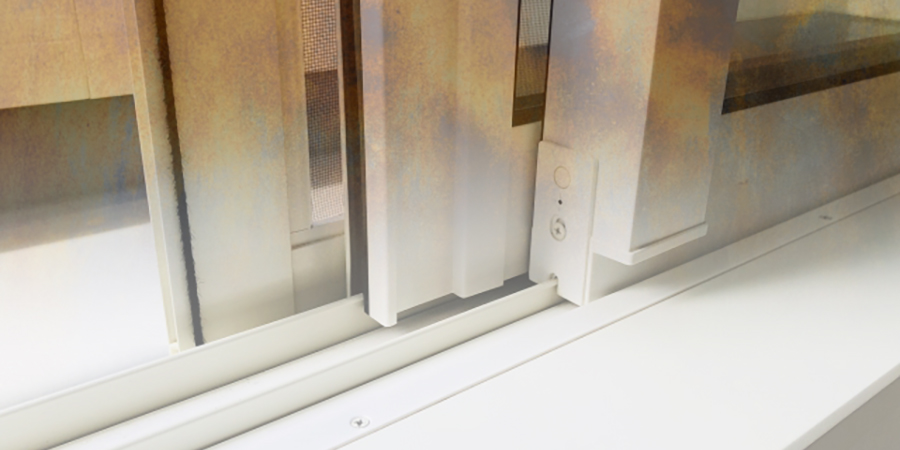
When using detergents, you need to pay attention not only to their compatibility with dirt but also to their compatibility with the materials in the area you are cleaning.
For example, if your window frames are made of aluminum, aluminum is weak against alkaline substances, so using an alkaline detergent could cause corrosion.
Similarly, while acidic detergents are effective against water stains and rust, they can cause corrosion in metal-processed materials, so caution is advised.
Types and Characteristics of Detergents, and Where to Clean!
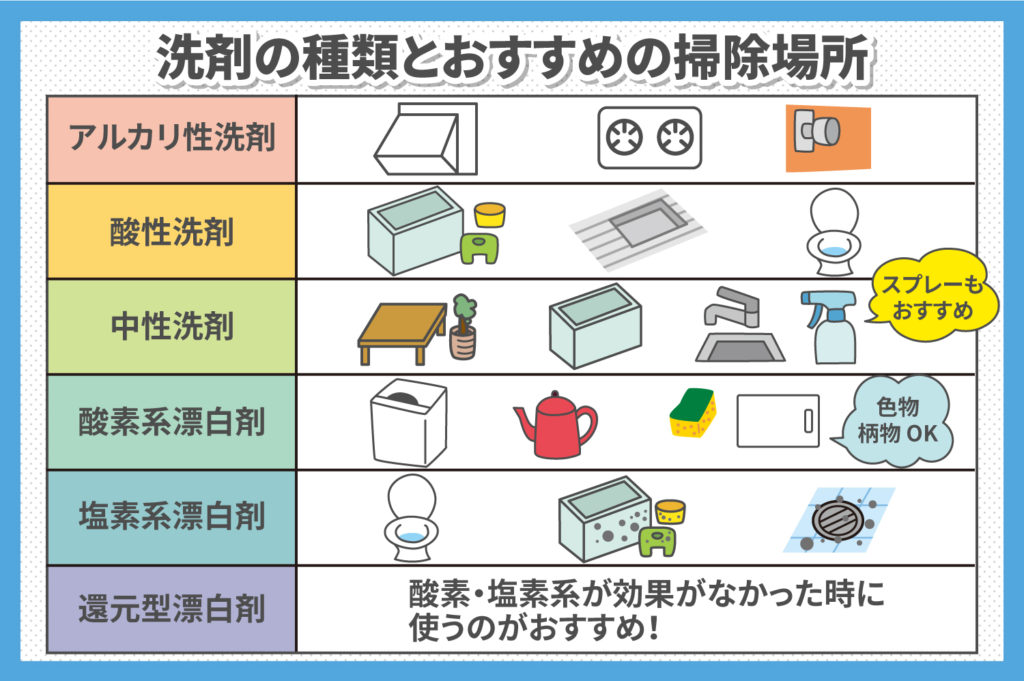
Currently, various household detergents are sold by manufacturers, but they can be broadly classified into six types.
Each type has different characteristics and is suitable for different cleaning areas, so refer to the information below to effectively use and maintain your home with the right detergent.
Alkaline Detergent: Perfect for cleaning grease!
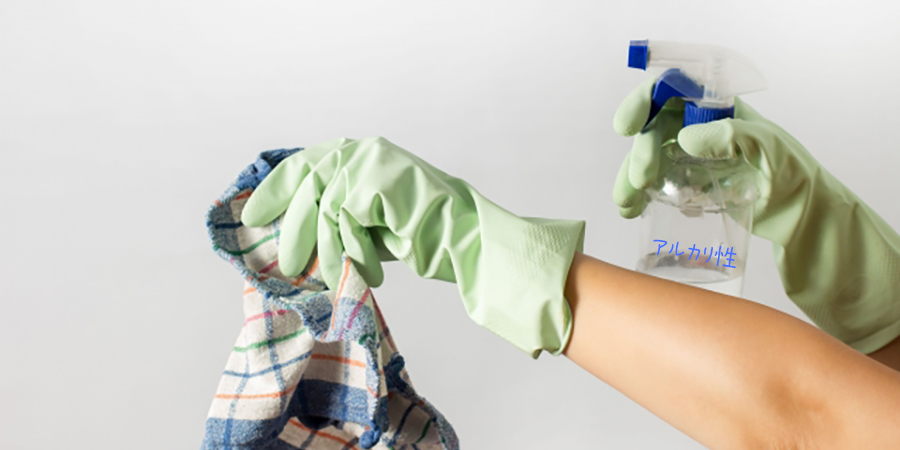
Alkaline detergents are household cleaning products with a pH value of 9 or higher.
The higher the pH value, the stronger the alkalinity, with pH 9-11 classified as "mildly alkaline" and above 11 as "alkaline."
They work by breaking down and dissolving fats, proteins, and sugars, making it easier to remove acidic dirt like grease, body oils, and fingerprints.
For simple grease stains, a mild alkaline detergent gentle on the skin is sufficient, but for stubborn stains, an alkaline detergent is recommended.
In that case, considering the impact on your hands, use rubber gloves or similar protection.
Alkaline detergent is perfect for cleaning around the kitchen and doorknobs.
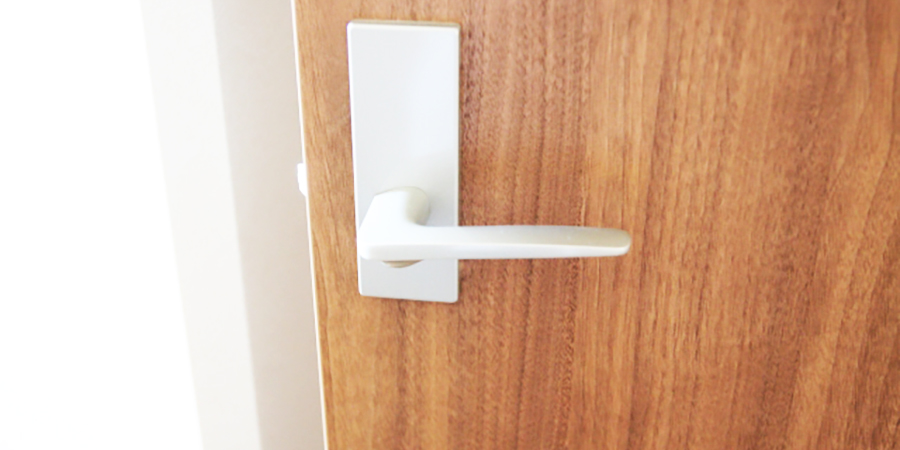
Alkaline detergents are compatible with grease, making them suitable for cleaning areas around the kitchen that tend to accumulate oily dirt, such as stovetops and range hoods.
Especially for areas like range hoods that are only cleaned once or twice a year, soaking them in a strong alkaline detergent will effectively remove dirt.
Additionally, for places prone to fingerprints and sebum, like doorknobs in the living room or toilet, a mild alkaline detergent can wipe away smudges and grime.
Remove water stains and soap scum with this! Acidic Detergent
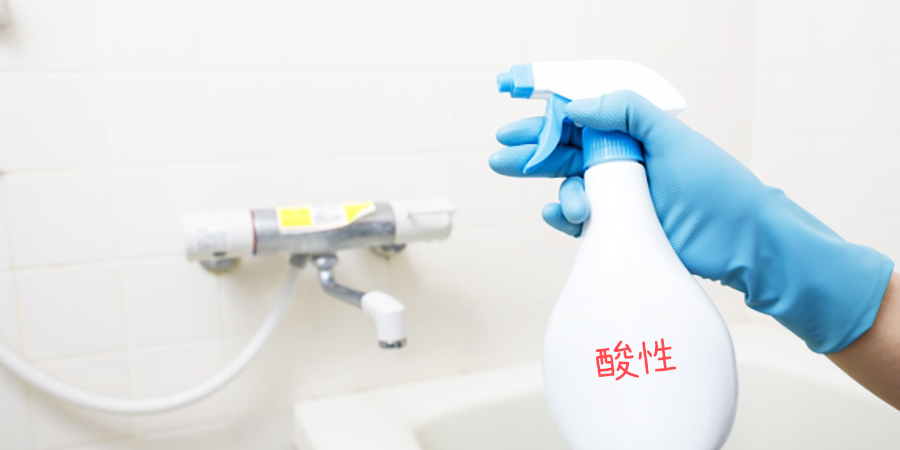
Acidic detergents are household cleaning products with a pH value of 5 or lower.
In contrast to alkaline detergents, the lower the pH value, the stronger the acidity. Those with a pH between 3 and less than 6 are classified as "mildly acidic," and those with a pH less than 3 are "acidic."
They are effective against alkaline stains such as water stains, soap scum, rust, urine scale, and tobacco tar. Using an acidic detergent can also remove stubborn stains like yellowing and pink mold.
Acidic detergent is ideal for cleaning bathrooms and toilets!
Acidic detergents are compatible with water stains, soap scum, and rust that often appear in wet areas, making them ideal for cleaning bathrooms and kitchen sinks.
They can also remove urine scale, making them useful as toilet cleaners.
If you smoke at home, acidic detergents can effectively clean the grease stains on walls and ceilings.
Useful for daily cleaning! Neutral Detergent
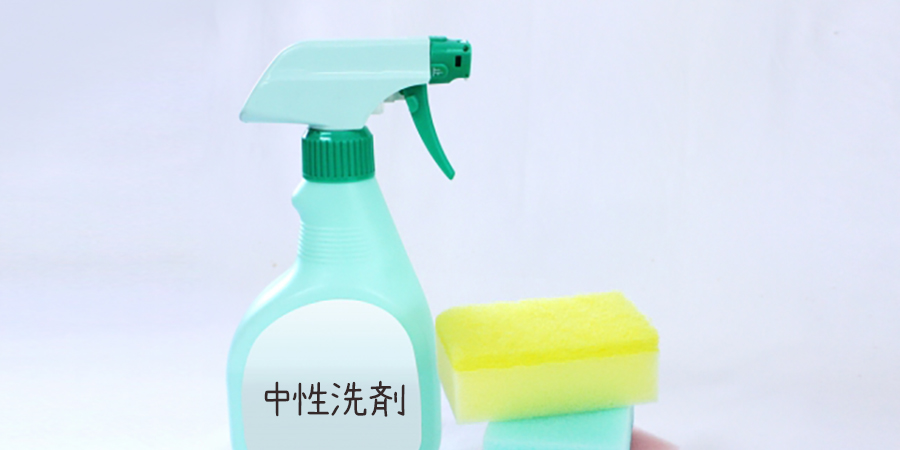
Neutral detergents are household cleaning products that fall right in the middle of the acidic and alkaline range, typically with a pH value between 6 and 8.
As a neutral detergent that doesn't lean towards either acidic or alkaline, its cleaning power isn't exceptionally strong, but its characteristic is that it's gentle on skin and materials, and less likely to cause problems.
Neutral detergent is an all-purpose cleaner that can be used in various places.
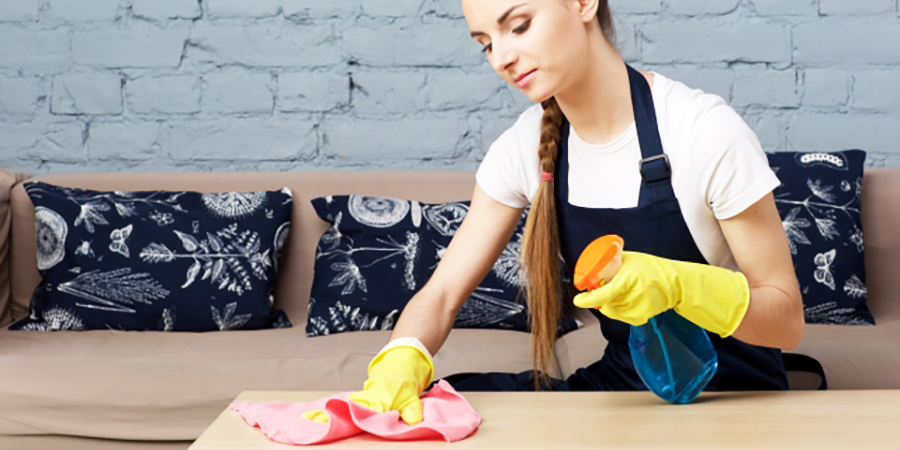
Neutral detergents, with their moderate cleaning power, can be used almost anywhere in the house.
They are useful for cleaning various areas such as the kitchen, living room, bathroom, toilet, walls, and floors, so having a convenient spray-type neutral detergent on hand can be very helpful.
Since they are less likely to damage building materials and surfaces, it's best to start by cleaning with a neutral detergent and then use an acidic or alkaline detergent for any remaining stubborn stains.
Recommended for stain removal and disinfection! Oxygen-based bleach
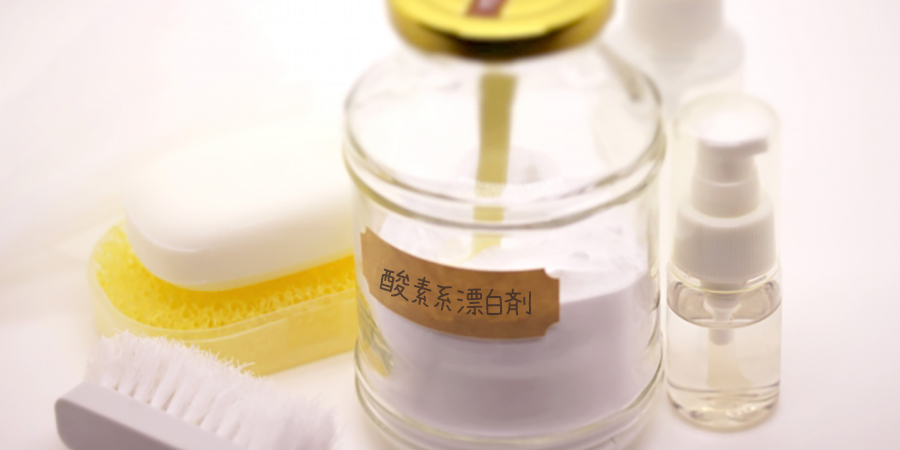
Oxygen-based bleach is a bleaching agent primarily composed of hydrogen peroxide or sodium percarbonate.
It comes in two types, liquid and powder, with the former being mildly acidic and the latter mildly alkaline.
It primarily offers effects such as stain removal, bleaching, disinfection, and deodorization. However, its effects are gentler compared to chlorine-based bleach, so it can be used on colored and patterned items.
It also doesn't produce strong odors, so it can be used in areas where smell is a concern.
Oxygen-based bleach can be used to clean pots and washing machine tubs.
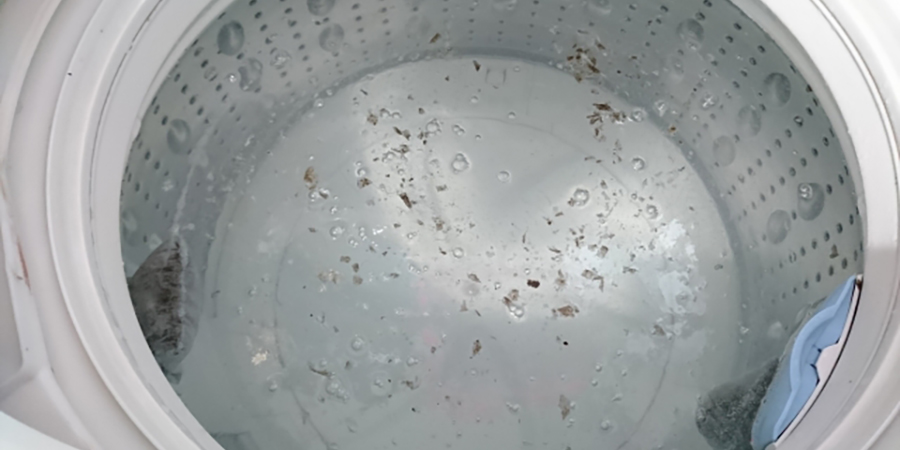
Oxygen-based bleach is useful for disinfecting cutting boards and sponges, and cleaning washing machine tubs, due to its bleaching and disinfecting effects.
For cutting boards and sponges, soaking them is sufficient.
When cleaning the washing machine tub, add bleach and run the machine; dirt will gradually float to the surface.
If you drain the dirt as is, it can cause clogging, so be sure to scoop it out with a net or similar before draining.
Super strong cleaning power! Chlorine-based bleach
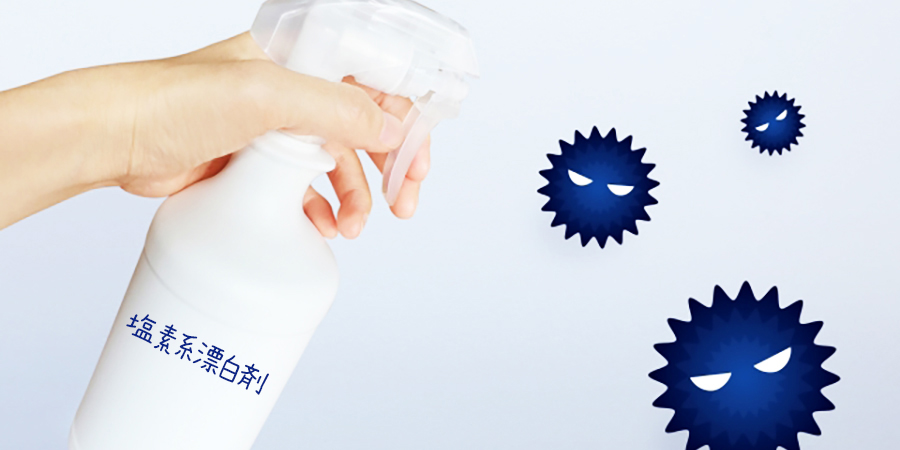
Chlorine-based bleach is an alkaline bleaching agent whose main component is sodium hypochlorite.
Chlorine-based products have extremely strong cleaning and bleaching power, capable of removing stains that oxygen-based bleaches cannot.
They also have strong antiseptic and disinfectant properties, so they are sometimes used for virus disinfection.
Chlorine-based bleach is useful for tough stains in the bathroom and toilet.
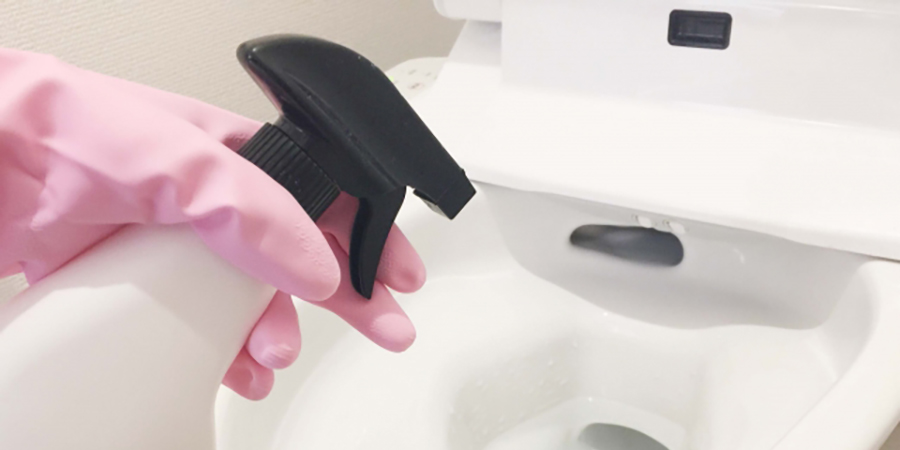
Chlorine-based bleach can effectively remove stubborn stains that oxygen-based bleach cannot eliminate completely.
It is useful for cleaning areas that are difficult to clean with just a quick scrub, such as black mold in the bathroom and black stains in toilet bowls and drains.
However, absolutely do not use it with acidic detergents.
There is a risk of chemical reaction producing toxic gas, so always use it alone.
Removes dirt by depriving it of oxygen! Reducing bleach
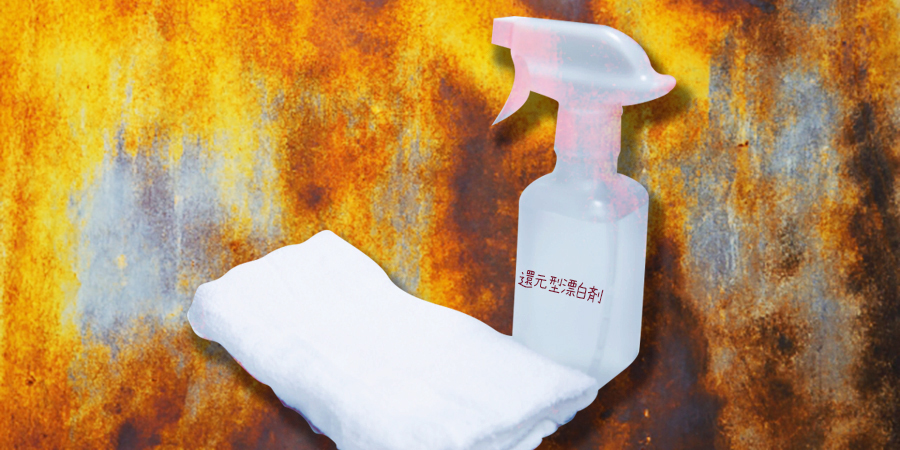
Unlike the other two types of bleach that break down pigments by providing oxygen, reducing bleach works by depriving oxygen to bleach.
Because the bleaching mechanism is fundamentally different, it can clean rust and red dirt stains that cannot be removed by oxygen-based or chlorine-based bleaches.
Reducing bleach is effective on stains that other bleaches couldn't remove.
Reducing bleach is essentially used in the same places as oxygen-based and chlorine-based bleaches.
If stains couldn't be removed with the other two, switching to reducing bleach might clean them effectively.
It doesn't offer much in the way of disinfection or sterilization, so use it primarily for stain removal.
▶ If you're doing it yourself, this is the one | King of Air | Saikyou-kun